


US industrial markets see split recovery trends
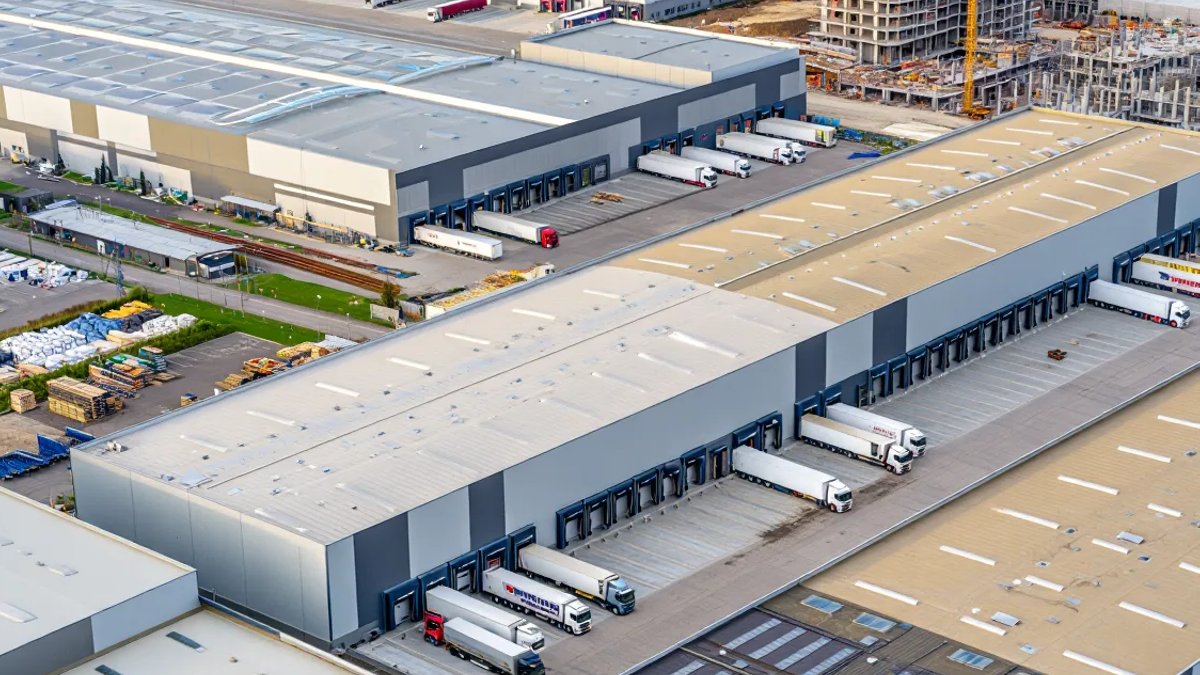
The 25 largest US industrial markets are splitting into tightening, stabilizing, and oversupplied camps, according to a new report from Colliers. Markets like Phoenix, Indianapolis, and Houston led post-2020 inventory growth, while supply pipelines are contracting nationally. Demand-driven Midwest and Sun Belt metros are pulling ahead, pointing to early signs of a new expansion cycle for industrial real estate.
The US industrial sector’s 25 largest markets are beginning to chart noticeably different courses as the frenetic supply wave of recent years ebbs. Colliers reports that these markets, which collectively expanded their inventories by nearly 1.9 billion square feet (15%) since 2020, are now at various stages: some are tightening, others are stabilizing, and a few still face excess space.
Pipeline resets and stabilizing demand signal the early stages of a new expansion, with fundamentals improving quickest in Midwest and Sun Belt regions. Coastal markets, by contrast, are still digesting the prior delivery surge.
Midwest and Sun Belt Take the Lead
Phoenix, Indianapolis, and Houston stand out for the fastest industrial inventory growth since 2020. Phoenix expanded by 42% (adding 137 million square feet), Indianapolis by 34% (90 million square feet), and Houston by 32% (152 million square feet). Eight of the largest 25 markets saw inventories swell more than 20%.
Related: Sustainability in Indonesia’s Pharmacy Sector: Challenges and Opportunities
However, the pace peaked in 2023. The most recent year saw just 1.3% average growth across the top 25. As of Q1 2026, the national construction pipeline — after bottoming at 268 million square feet at 2025 year-end — ticked up to 286 million square feet, still well below the 2022 peak of 711 million square feet.
Developers are re-entering some markets selectively as fundamentals turn positive.
Tightening Versus Saturation: A Market Split
Net absorption now outpaces new supply in 16 of the top 25 markets, indicating stabilized or tightening fundamentals. Six metros are in clear tightening. Columbus posted 11.1 million square feet in net absorption versus just 2.1 million square feet of completions. Indianapolis clocked 15.7 million square feet absorbed — quadruple its 3.9 million square feet of new supply. Phoenix, Memphis, Cincinnati, and Chicago also saw demand outstrip additions.
Meanwhile, coastal hubs like Greater Los Angeles delivered 17.4 million square feet but absorbed just 1.3 million square feet, still grappling with excess space. A similar divide has emerged in apartments, where some metros still struggle with raised supply levels. But the number of supply-heavy markets is shrinking, a sign that equilibrium is near for much of the sector.
Related: What are the Benefits of Biophilic Design
Midwest metros and Sun Belt cities are best positioned as demand remains healthy and pipelines are right-sized.
The divided recovery across America’s industrial hubs signals a new cycle for the sector. Colliers’ data suggests that selective market exposure is now key. The top 25 markets accounted for 189 million square feet (66%) of all US space under construction in Q1 2026, but only 12 posted net absorption greater than active pipeline. Indianapolis (15.7 million square feet absorbed vs. 4.1 million square feet under construction) and Phoenix (18.5 million square feet absorbed vs. 14 million square feet pipeline) led the pack.
Markets that overbuilt, notably Greater LA, Philadelphia, and Seattle, are still working through their supply, but retrenching construction is closing the excess.
Rents Tell a Similar Story
Rents reflect these diverging conditions. The average for the largest US industrial markets rose 0.8% to $9.72 per square foot NNN in the last year, outpacing the national decline of 0.5%. Sun Belt and Midwest metros again excel, with Houston (+14.2%) showing the strongest growth, followed by Indianapolis (+5.4%), Dallas-Fort Worth (+5.0%), and Nashville (+5.0%).
Related: Choosing emergency locksmith services
By contrast, rents dropped sharply in coastal, high-supply cities. Greater LA slipped 8.5%, Denver 5.6%, and Atlanta 4.7%. For developers and investors, these figures reinforce the need to focus capital where demand is real and growing, rather than chasing the last cycle’s hot spots.
With industrial construction pipelines 60% below their 2022 mark, the focus is shifting from delivery absorption to early-stage growth. Markets like Dallas-Fort Worth, Houston, and Indianapolis — notably with strong tenant demand and moderate pipelines — are set to attract a larger share of investment and development through 2026.
Coastal markets are expected to remain slower-growing as they finish absorbing surplus space, but the segment as a whole is moving toward a broadly healthier equilibrium. Fundamentals, led by the Midwest and Sun Belt, support the thesis that the next industrial bull run is beginning. Investors, developers, and occupiers will need to watch these leading markets for the earliest signs of the next upcycle.


